Restaurant Marketing Ideas That Fill Tables in Canada
15 min read


The restaurant marketing ideas that work best are rarely clever. They are a complete Google listing, a special people can find in ten seconds, a reason to come back, photos guests want to share, and a few local partners who send you new faces. Below are the ideas worth your time, how to pick between them, and the Canadian rules to check before you run a promotion.
TL;DR
- Start with the basics: an accurate online listing, current hours and menu, and one measurable goal such as reservations or covers on slow nights.
- Make your offer easy to find. Specials, happy hours and events only work when diners can see them at the moment they decide where to go.
- Build repeat visits with recognition and a simple loyalty offer, not discounts alone.
- Use local partners, events and customer photos for low-cost word of mouth.
- Check the federal rules for contests and the anti-spam rules for email and text before you launch.
Table of Contents
- Start with a plan you can measure
- The channels worth using
- Promotion ideas that bring diners in
- Build repeat visits with loyalty and recognition
- Social media and customer photos
- Local partnerships, events and word of mouth
- Perspective: why we think discovery is the real marketing problem
- Get your specials in front of diners with Kestr
- Check the rules before you promote
- A simple 90-day starting plan
- FAQ
- Sources
Start with a plan you can measure
The market is large and competitive. Restaurants Canada describes Canada’s foodservice industry as a $114-billion industry, and its research finds that 45% of Canadians buy from a restaurant once a week or more. Your guests are already out there spending. The job is to be the place they pick.
A simple marketing plan names who you want (office lunch crowd, couples on weekends, students, regulars from the neighbourhood), what you want to tell them, which channels you will use, what you will spend and how you will know it worked. One restaurant-marketing guide suggests reviewing results weekly, monthly, quarterly and annually, which is a sensible rhythm for a small operation.
Choose outcomes over activity. “Post four times a week” is an activity. “Add 40 reservations on Tuesdays” is an outcome. The same guide makes this point, and it changes which ideas you keep. If a tactic does not move a number you care about after a month or two, drop it.
A practical way to measure without expensive software:
- Pick one slow day or daypart you want to fill.
- Record covers and sales for that slot for four normal weeks.
- Run one promotion for four weeks.
- Compare, and ask guests how they heard about it, at the host stand or in the reservation note.
The channels worth using
Most restaurants do not need every channel. They need three or four done well. Here is how the main ones compare.
| Channel | Best for | Effort | What to watch |
|---|---|---|---|
| Google listing (Search and Maps) | Diners deciding nearby, right now | Low, then weekly upkeep | Wrong hours or an old menu cost you walk-ins |
| Social media | Showing food, atmosphere and events | Medium, ongoing | Chasing likes instead of visits |
| Email and text | Repeat visits, events, slow nights | Low to medium | Consent rules (see below) |
| Delivery and discovery platforms | New customers beyond your street | Medium | Fees, and guests who never become regulars |
| Local partnerships and events | Word of mouth, new neighbourhood guests | Medium, in bursts | Needs a clear audience and date |
| Deal and discovery apps | Diners searching for specials and happy hours | Low | Keep your listing current |
Your online listing comes first
Before anything paid, claim and complete your profile. Google says a Business Profile for restaurants lets you manage how your information appears on Search and Maps, add hours, dining options, photos of your menu and best dishes, and post special offers. It is free, and it is the page many guests see before your own website.
Reviews matter here too. Restaurants Canada reported that 57% of Canadians check online reviews before choosing where to dine. Ask happy guests for a review, reply to every one, and answer complaints calmly and specifically.
Email and text
Email remains the cheapest way to reach people who already like you. The catch in Canada is law. Canada’s anti-spam legislation requires that, for any commercial electronic message, you obtain consent, identify yourself and provide an unsubscribe mechanism. Collect sign-ups with a clear opt-in at the table, on your reservation form or at checkout, and honour unsubscribes promptly.
Delivery and discovery platforms
Third-party delivery and discovery sites can put your menu in front of people who have never walked past you. Treat them as a way to meet new customers, not as your only channel, because the platform owns the relationship unless you move guests to your own list or loyalty offer. Insert a card or a QR code in the bag that invites them to dine in or order direct, and check what the platform charges before you build a promotion on thin margins.
In person
Do not neglect the street. A sandwich board with today’s special, a window menu that is readable at night, a host who mentions the weekend event: these cost almost nothing, and they reach people who are already close enough to come in.
Promotion ideas that bring diners in
Promotions work when they give a clear reason to choose you on a specific day. Restaurants Canada and Circana’s 2025 dining trends note that digital coupons have overtaken physical coupons and that consumers increasingly turn to social media to find deals. The same report frames value as more than a low price: it includes digital convenience, customization and items that feel worth what they cost.
That suggests the strongest offers are specific and easy to claim, rather than deep and vague. Some that fit most independent restaurants:
- A weekday special with a name. “Tuesday pasta and a glass” is easier to remember and repeat than “10% off.” Pick your slowest night.
- A happy hour with real hours. Publish start and end times, which drinks and snacks are included, and whether it applies on the patio. Ambiguity sends diners to the next bar.
- A limited-time menu item. A seasonal dish or a one-month feature gives you something new to post about and a reason for regulars to return.
- Early-bird or late-night pricing. Fill the shoulder hours at either end of service without discounting your busiest time.
- A bring-a-friend perk. A shared starter when two people check in is cheaper than a percentage off the whole bill and brings a second guest.
- Seasonal campaigns. Patio opening, Thanksgiving menus, holiday party bookings, winter comfort food, local festivals. Plan these a few weeks ahead and put them on your calendar once a year.
- Event nights. Trivia, live music, a chef’s table, a wine pairing. Events give guests something to tell friends about.
Two cautions. First, price every offer against your food cost and labour before you launch it, so a popular special does not lose you money. Second, change offers on a schedule. Permanent discounts train guests to wait for them.
Build repeat visits with loyalty and recognition
Winning a first visit is expensive. The second and third are where profit builds. Restaurants Canada’s research shows nearly six in 10 Canadians aged 18 to 54 belong to at least one restaurant loyalty program, with the average user enrolled in 2.6. Your guests are used to the idea, and they are comparing you with several others.
A small restaurant does not need a complex points system. Options that work at small scale:
- A stamp or digital punch card: the tenth coffee, the fifth dinner, a free dessert.
- A birthday or anniversary treat for people on your email list (with consent).
- First access to new menus or event tickets for regulars.
- Recognition: remembering names, favourite tables and usual orders.
That last one is not a gimmick. A Square report on local economies suggests that loyalty can be built through recognition, personalization and memorable experiences, not only discounts. Train staff to note preferences and greet returning guests. It costs nothing and is hard for a larger chain to copy.
Social media and customer photos
Social media works for restaurants when it answers real diner questions: what does it look like, what is on the menu, what is happening this week. Restaurants Canada found that 31% of Gen Z and 27% of Millennials discover restaurants on Instagram, with Millennials especially influenced by high-quality food photos and Gen Z by ambience and promotions.
A workable approach, based on guidance for Canadian restaurants from a food-delivery company’s social media guide:
- Post high-quality photos of signature dishes.
- Use Stories for new items and daily updates.
- Keep Highlights for FAQs, menus and interior photos.
- Use Reels for behind-the-scenes kitchen clips.
- Reply quickly to comments and direct messages.
What Canadian restaurants do
Tacofino, a Canadian restaurant group, is a useful example. A Restobiz case study reports that it used Highlights to keep practical information easy to find, timely Stories for daily updates and quick replies to messages. It also received as many as 50 Story tags on some days and picked the best customer posts to repost, which the restaurant said improved the quality of what customers shared.
Vancouver bar Batch took a schedule-led approach. BCBusiness reported that it posted weekly Instagram schedules for its rotating food trucks and live music, saved them to Stories, and ran a prize-based “pup of the week” post. It also asked customers which local beers to add, which turns followers into participants.
Reposting customer content properly
Customer photos are free, believable marketing. Pizza Today recommends finding them through notifications, geotags, in-photo tags and branded hashtags, then getting written permission, crediting the creator and keeping consent records before you repost. Ask first, every time.
Local partnerships, events and word of mouth
Partnerships let you borrow another business’s audience. Restobiz lists several formats: kitchen takeovers with local chefs, pop-ups with food trucks, tasting menus with local producers, paired menus with alcohol providers and charity fundraisers.
Vancouver’s DownLow Chicken Shack grew its exposure through collaborations with breweries, bakeries, beverage makers and other restaurants, including pop-ups and co-branded menu items. Both sides promote the event to their own followers, so the reach is doubled for the cost of one menu.
Community involvement works for large brands too. Franchise Canada reported that Pizza Pizza built awareness of its charitable work through grassroots outreach, conversations between staff, franchisees and customers, and signage at community events. For a single location, the equivalent is sponsoring a local team, hosting a fundraiser night or opening your room to a neighbourhood group on a quiet evening.
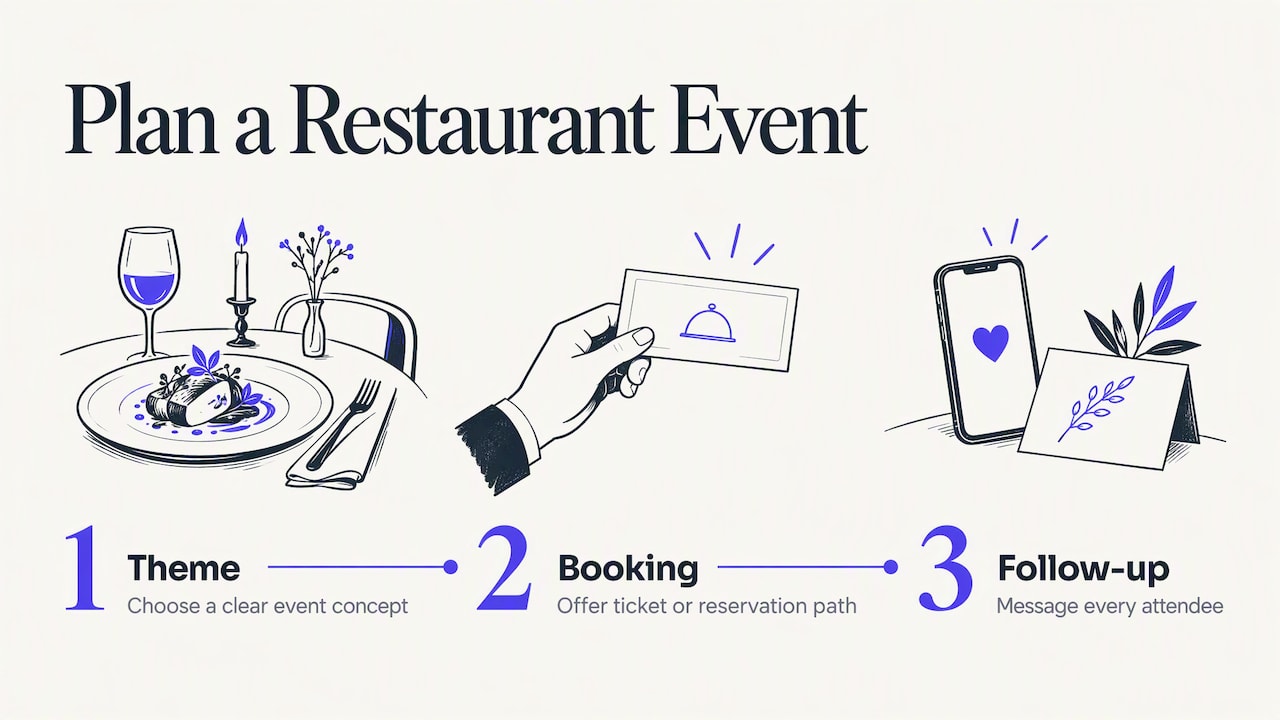
Events also matter for another reason. Restobiz notes that many first-time guests meet a restaurant through an event, so a well-run one can bring new guests, loyalty and word of mouth together. Give each event a clear theme, a simple ticket or reservation path and a follow-up message to everyone who came.
Perspective: why we think discovery is the real marketing problem
We built Kestr around a simple observation: people decide where to go with their phones, usually in a group, usually late in the afternoon. They want to know who has a deal tonight, where the happy hour is, and what is on nearby. If your special is on a chalkboard inside, nobody deciding at 5 p.m. will see it.
So our advice to owners is to make your offers visible where decisions get made, and to keep them current. Stale information is worse than none, because a guest who arrives for a special that ended loses trust fast. That is why we lean on community updates: diners can add and share deals, so what is on the map stays fresh and local.
We also think nights out should be fun. Points, badges and local leaderboards give regulars a reason to try the place down the street, and give you a reason to be worth the trip. Pair that with easy next steps, a table through OpenTable and a ride through Uber, and the path from “where should we go?” to “we’re here” gets short.
— Jesse
Get your specials in front of diners with Kestr
If your marketing plan includes specials, happy hours or live entertainment, Kestr is built to show them. We map bars, restaurants and live entertainment venues and display real-time deals, specials, happy hours and events. Diners can scan and share deals, book through OpenTable, order a ride with Uber and earn points on local leaderboards.
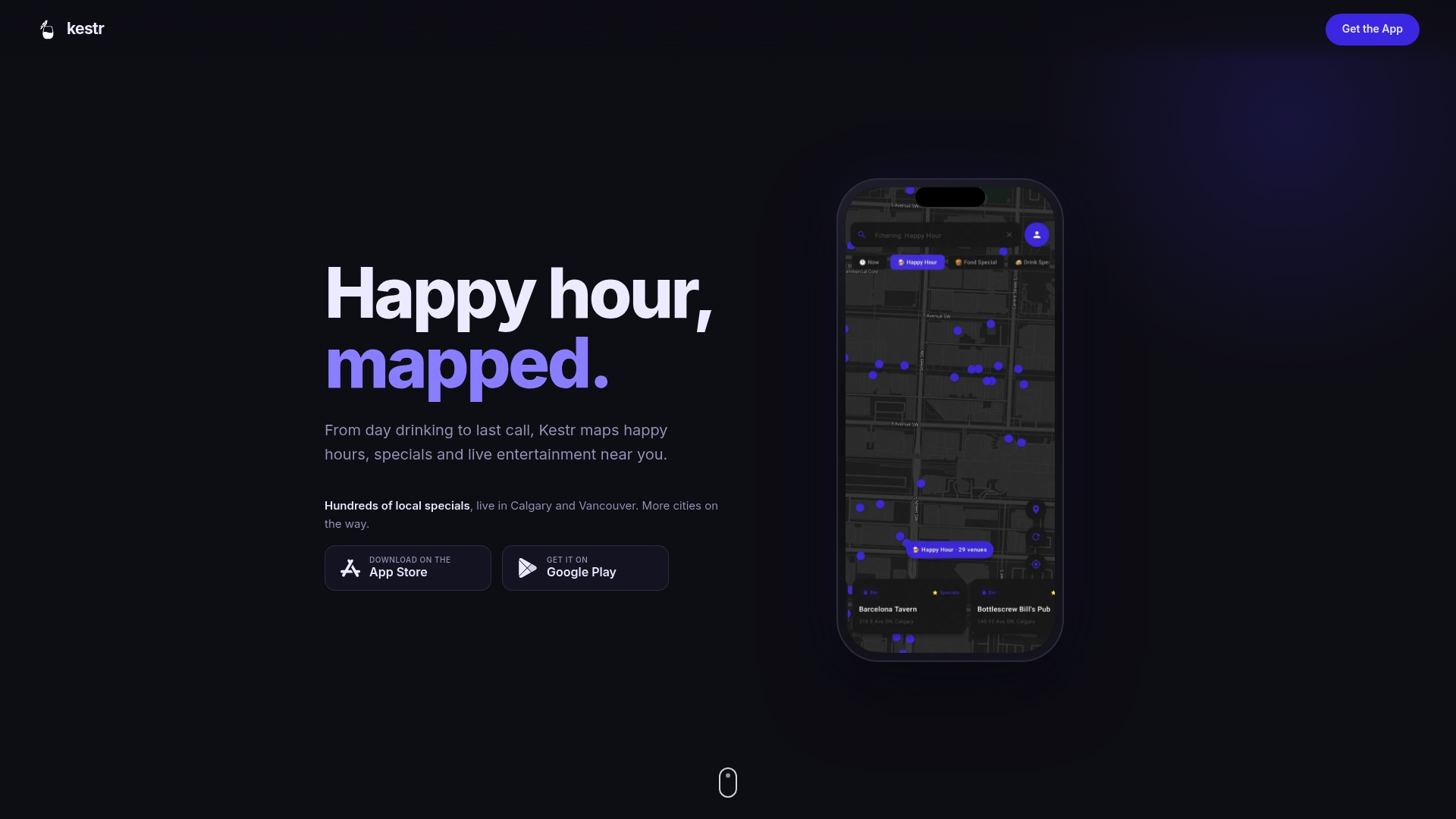
Kestr is free for diners. Venue owners and managers can claim and manage their listing and deals through subscription plans. See how it works at Kestr, and claim your listing so the people searching for a good night out tonight can find yours.
Check the rules before you promote
Canadian promotions sit under federal rules, and some provinces add their own, so check the ones where you operate.
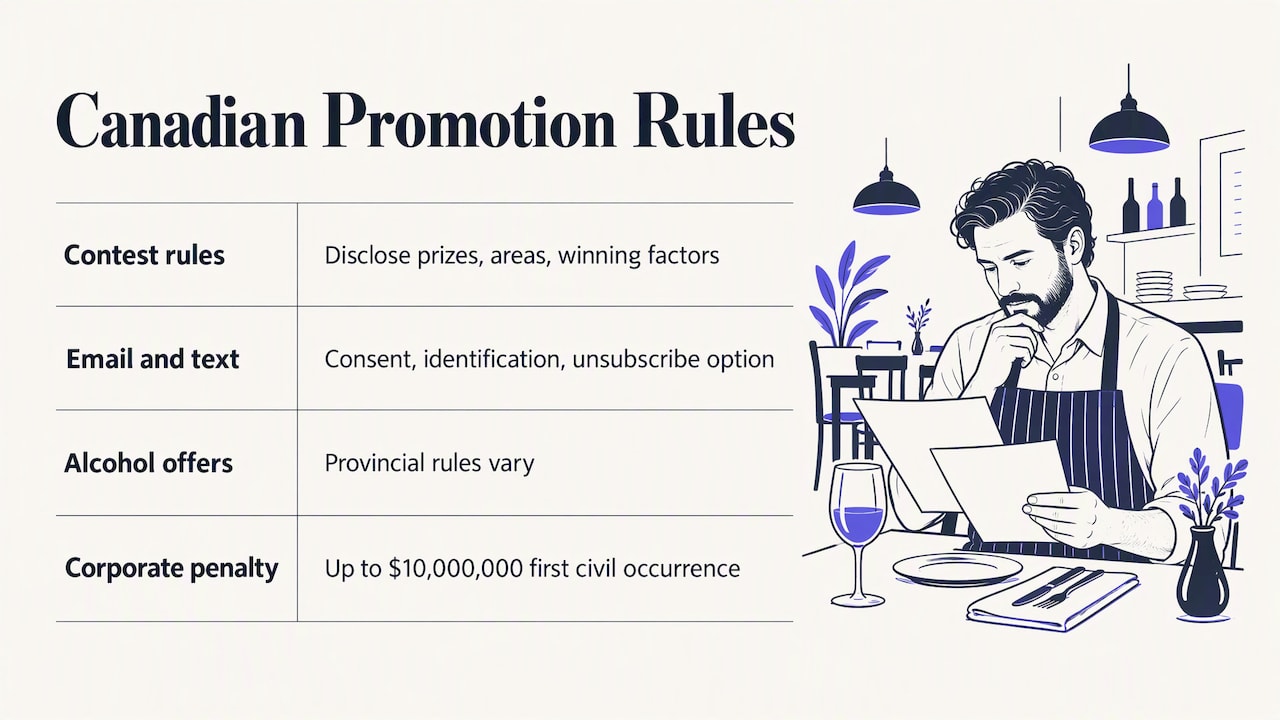
Contests and giveaways. The Competition Bureau’s guidelines say section 74.06 of the Competition Act requires you to disclose the number and approximate value of prizes, the areas they relate to and anything that materially affects the chances of winning. Purchase requirements should be disclosed where necessary. The same page notes that corporations face significant penalties, potentially up to $10,000,000 for a first civil occurrence. Write clear rules, post them where the contest runs and keep records. For prize draws, ask a lawyer or your provincial regulator about skill-testing questions and local licensing, particularly in Quebec, before you launch.
Email and text. As covered above, you need consent, identification and an unsubscribe mechanism for every commercial message.
Alcohol promotions. Happy hours and drink specials are regulated provincially, and rules differ between Alberta, British Columbia and Ontario. Check your provincial liquor regulator’s current guidance before you advertise drink prices.
A simple 90-day starting plan
If you want to act this week, here is an order that avoids overwhelm.
- Week 1: Complete your Google listing, correct your hours and upload a current menu and fresh photos.
- Week 2: Choose one slow daypart and design one named special for it. Cost it out.
- Weeks 3 to 4: Announce it everywhere diners look: your listing, Instagram, a sandwich board, your email list and deal-discovery apps.
- Month 2: Add a simple loyalty offer and train staff to greet and recognize regulars.
- Month 3: Run one partner event with a local brewery, baker or chef. Collect emails with consent.
- End of month 3: Compare covers on your target slot to the baseline. Keep what worked, drop what did not, and pick the next idea.
FAQ
What is the cheapest way to market a restaurant?
Start with a complete, accurate Google listing, polite replies to reviews and a well-named weekly special. Add customer photos you have permission to repost, and a consent-based email list. These cost time rather than money and reach people already searching for somewhere to eat.
Which marketing channels should a small restaurant prioritize?
Begin with your online listing, one social platform you can keep up and an email or text list. Add delivery or discovery platforms and deal apps if you want new customers beyond your immediate area. Local partnerships and events round it out.
How do I know if a promotion worked?
Set a baseline for the slot you want to fill, run the promotion for several weeks and compare covers and sales. Ask guests how they heard about you. Judge it on outcomes such as reservations and repeat visits, not on likes.
Do I need to follow special rules for a giveaway or contest?
Yes. Federal law requires you to disclose the number and approximate value of prizes and any information that materially affects the chances of winning. Provincial requirements can add more, so confirm them where you operate before you launch.
Sources
- Foodservice Facts 2024: Charting a Path to Prosperity
- Foodservice Facts 2024 (Restaurants Canada)
- How to Write a Restaurant Marketing Plan
- Google Business Profile for restaurants
- Restaurants Canada: Not All Tech Comes with a High Price Tag
- CRTC: Canada’s Anti-Spam Legislation FAQ
- Canada’s 2025 dining trends
- Square Local Economy Report
- Restaurant Social Media Marketing guide
- Instagram in foodservice: A cross-Canada case study
- Social Cues: How Vancouver bar Batch creates a welcoming vibe
- User-Generated Content (Pizza Today)
- 5 partnerships that can raise your restaurant revenue
- Collaboration is a special sauce for DownLow Chicken
- Giving Back: Raising Dough for Charity
- Crafting restaurant events that define your brand
- Promotional Contests: Enforcement guidelines